Bertolotti's Syndrome is a congenital spine condition where the L5 vertebra abnormally fuses with the sacrum, causing chronic lower back pain. CFRS's board-certified spine specialists in New Jersey diagnose and treat this often-overlooked condition.



Bertolotti's Syndrome Care at the Center for the Functional Restoration of the Spine
Bertolotti's Syndrome is one of the most commonly overlooked causes of chronic lower back pain, in part because it mimics more familiar spine conditions and rarely shows up on a standard physical exam. At the Center for the Functional Restoration of the Spine, our board-certified spine surgeons have the imaging expertise and diagnostic experience to recognize a lumbosacral transitional vertebra when it's the true source of a patient's pain, and to build a treatment plan around it instead of continuing to chase symptoms elsewhere in the spine. Patients across New Jersey come to CFRS after months or years of pain that other providers couldn't explain. We start by finding the actual cause.
What Is Bertolotti's Syndrome?
Bertolotti's Syndrome develops when the lowest bone in the lumbar spine, L5, partially fuses or forms an abnormal joint with the sacrum instead of remaining a separate, mobile vertebra. Spine specialists call this a lumbosacral transitional vertebra, or LSTV, and it's present in roughly 4 to 8 percent of the population. Most people with an LSTV never know they have one. Bertolotti's Syndrome is the name given to the condition only when that transitional vertebra starts to cause pain, typically because it changes how load moves through the lower spine, accelerates wear on the disc and joints nearby, or creates an inflamed pseudo-joint where the extra bone contacts the sacrum. Because the pain pattern looks so similar to a herniated disc, facet joint syndrome, or general degenerative disc disease, Bertolotti's Syndrome is frequently missed on a first evaluation.

Why Choose CFRS for Bertolotti's Syndrome Treatment?
Bertolotti's Syndrome is easy to miss and hard to treat well without the right diagnostic approach, which is exactly where CFRS's spine specialists focus. Dr. Steve Paragioudakis, founder of CFRS, along with Dr. Marc Menkowitz and fellowship-trained Dr. Christopher Dijanic, bring decades of combined experience diagnosing complex, atypical sources of back pain that other providers overlook. Nurse practitioner Courtney Brennan works alongside our surgeons to support patients through conservative care and recovery. With locations in Edison, Shrewsbury, and Toms River, CFRS makes it possible for patients across New Jersey to get an accurate diagnosis and a treatment plan built around their specific anatomy, not a generic back pain protocol. Restoring Spinal Function isn't just our tagline. It's the standard we hold every Bertolotti's Syndrome case to.

Bertolotti's Syndrome FAQs
What does Bertolotti's Syndrome pain feel like?
How common is Bertolotti's Syndrome?
Can Bertolotti's Syndrome be treated without surgery?
How do I know if my back pain is from Bertolotti's Syndrome?
What's the difference between a Bertolotti resection and spinal fusion?
What does Bertolotti's Syndrome pain feel like?
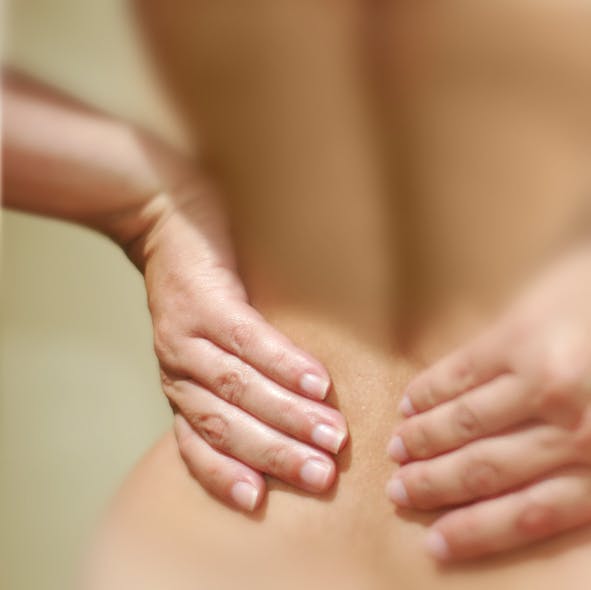
Most patients describe a persistent, one-sided ache low in the back that worsens with standing or walking and sometimes radiates into the hip. It's often mistaken for sciatica, SI joint pain, or a disc problem until imaging identifies the transitional vertebra.
How common is Bertolotti's Syndrome?
A lumbosacral transitional vertebra shows up in roughly 4 to 8 percent of the population, but only a portion of those people develop symptoms severe enough to be diagnosed with Bertolotti's Syndrome. It's considered one of the more underdiagnosed causes of chronic low back pain.
Can Bertolotti's Syndrome be treated without surgery?
Yes. Many patients respond well to physical therapy, activity modification, and corticosteroid injections, and some are candidates for regenerative treatments like PRP. Surgery is typically reserved for patients who don't find lasting relief from conservative care.
How do I know if my back pain is from Bertolotti's Syndrome?
An X-ray is usually the first step, since it can reveal the transitional vertebra directly. If one is present, our spine specialists often use a diagnostic injection to confirm whether that joint is actually the source of your pain before recommending treatment.
What's the difference between a Bertolotti resection and spinal fusion?
A resection removes the abnormal bone causing the pain while preserving normal spinal motion, and it's our preferred approach when the anatomy allows it. Fusion permanently stabilizes the segment and is reserved for cases where instability makes resection alone insufficient.